Teaching Relief for Learning (TRL)
A SAL2 program, Teaching Relief for Learning allows a faculty member to spend a semester in the classroom on the other side of the desk—as a student.

What does Teaching Relief for Learning entail?
Faculty participating in the standard TRL may take courses related to research and teaching projects, they may use this opportunity to explore new fields or hone new technical skills and knowledge, or they may use the opportunity for pure intellectual exploration.
TRL participants will enroll (in a non-credit fashion) in 2–3 courses during their TRL, participating as fully as possible in class activities and assignments. Courses may be at the undergraduate or graduate level, and may be in a single department, or across several departments. Agreement of the instructor must be secured. Past courses have included – but are not limited to – courses on statistics, data science, music theory, political science, computer science, history of art, artificial intelligence, environmental history, literature, history of music, and natural resource economics.
Teaching Relief for Learning provides relief from teaching responsibilities, without loss of salary or benefits, for an academic semester.
Eligibility
Full professors with a primary or fully joint appointment in an FAS department or program, and senior lectors II, senior lecturers, and senior lecturers II with a primary or fully joint full-time multi-year appointment in an FAS department or program or the MacMillan Center are eligible for TRL. SAL2 will consider proposals from faculty whose departments have a plan and resources to meet all teaching commitments.
Faculty Experiences
Participants reflect on their semester of Teaching Relief for Learning
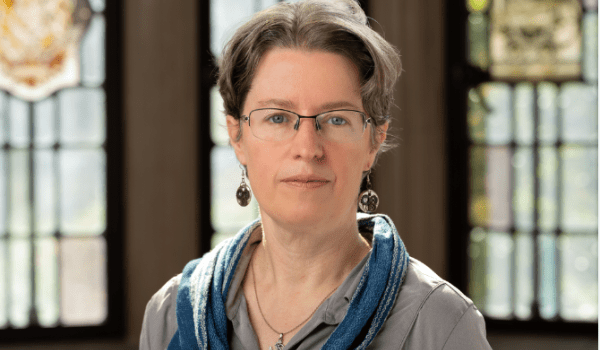
Claire Bowern, Linguistics
"The TRL semester helped me both see how to teach mathematical models used in linguistics and get a better overall sense of how the statistics work I do fits into other subjects. TRL offered a particular type of intellectual rejuvenation around covid."
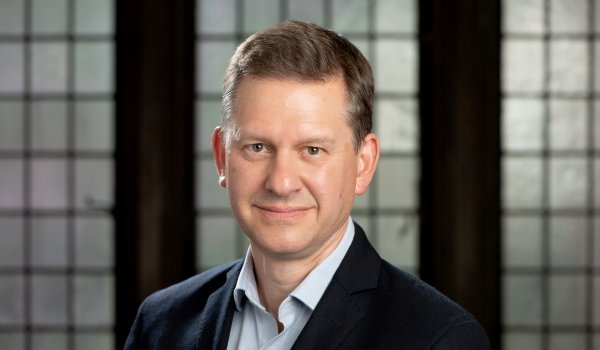
Stuart Semmel, History & Humanities
"For my semester of TRL, I took courses in statistics and music theory. I hoped they’d reactivate atrophied parts of my brain, teach me new skills, and help me think about alternative approaches to pedagogy. I learned a ton and loved every minute."

Shilarna Stokes, Theater, Dance, and Performance Studies
“I woke up every day of the semester with joy and a sense of anticipation about what the day’s classes would bring... I grew used to being surprised, daily, by some new and exciting idea that would take hold of my attention."
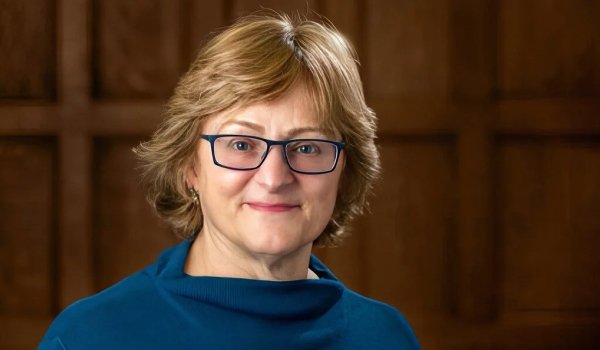
Meg Urry, Physics
"TRL was a wonderful experience. I made progress on the memoir I’m writing, and weekly feedback from my tutor was invaluable. I am very grateful to have had this opportunity."
Apply for Teaching Relief for Learning
We will accept applications for 2027-2028 beginning in August 2026.
Please note that, due to anticipated curricular need and the highly competitive nature of this program, we are only able to approve a very small number of faculty for TRL in 2027-2028. Interested faculty may be asked to defer their applications to the following year.
Application deadlines:
- September 4, 2026: Faculty wishing to be considered for a TRL during the 2027–2028 academic year should consult with their department chair no later than September 4, 2026, to determine that teaching relief during that year is compatible with departmental needs. Please note that SAL2 will consider proposals from faculty whose departments have a plan and resources to meet all teaching commitments.
- September 11, 2026: Once you have determined eligibility, send a one-paragraph expression of intent-to-apply by September 11, 2026, to sal2.fas@yale.edu. The expression of intent needs only to explain the semester you propose to take the teaching relief and the general topic(s) that you hope to study.
- September 25, 2026: Faculty who wish to be considered for a 2027–2028 TRL should submit a brief (one-page) statement of interest, which should include a provisional menu of proposed classes, via our application form, by September 25, 2026.
Please note:
- The FAS Dean’s office will work iteratively with faculty members who have submitted applications for a TRL to ascertain feasibility for 2027–2028.
- In departments with asymmetric teaching across semesters, the TRL should be taken in the semester when the faculty member is responsible for teaching the smaller number of courses. (That is: if your teaching expectations across the academic year are 2–1, you should take your TRL in the semester when you are expected to teach 1 course.)
- Among the courses that the faculty member teaches in their non-TRL semester should be at least one course open to undergraduates.
- The TRL may not be taken consecutive to any other scheduled leave, whether for a partial or full semester, and whether paid or unpaid. (That is: you may not take a TRL in Fall 2027 if you are or are scheduled to be on paid or unpaid leave in Spring 2027 or Spring 2028; you may not take a TRL in Spring of 2028 if you are scheduled to be on paid or unpaid leave in Fall 2027 or Fall 2028.)
- Faculty are expected to enroll (in a non-credit fashion) in 2–3 courses during their TRL, participating as fully as possible in class activities and assignments. Courses may be at the undergraduate or graduate level, and may be in a single department, or across several departments. Agreement of the instructor must be secured.
- A semester spent on TRL does not count as a semester of teaching toward eligibility for triennial leave of absence or other paid leave.

An Opportunity for Intellectual Exploration
As they reflect on their Teaching Relief for Learning semester, faculty share what it was like to become a student once again.
Contact
If you have questions about Teaching Relief for Learning, please email sal2.fas@yale.edu.